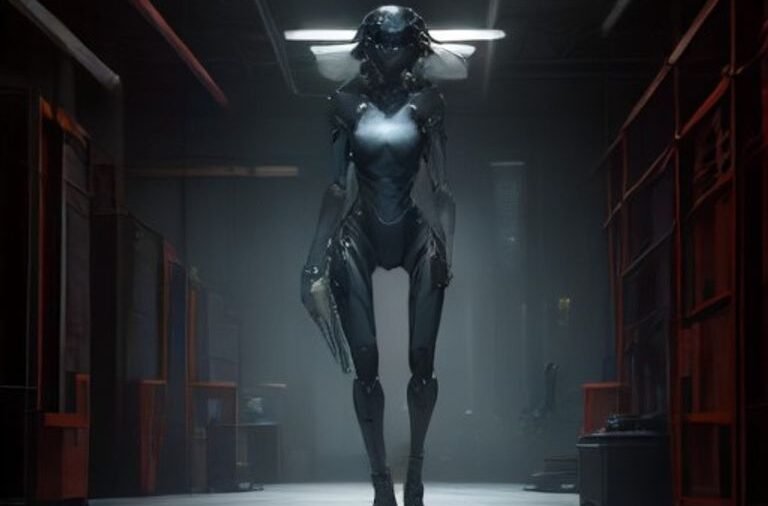
Why Humanoid Robots Are Suddenly Everywhere (And What It Means for You)
Walk into a technology conference, scroll through social media, or read a manufacturing journal today, and you will notice a common sight: bipedal robots with arms, hands, and digital faces walking, sorting, and assembling parts. For decades, humanoid robots were confined to the realms of science fiction or clunky, tethered laboratory experiments that required supercomputers just to take a single step. Suddenly, they are stepping out of research facilities and onto factory floors. This sudden surge is not a trick of marketing or a temporary media trend; it is the result of a profound technological convergence that has finally made general-purpose bipedal robotics both technically possible and economically viable.
The Convergence of AI and Hardware: Why Now?
The primary catalyst behind the sudden rise of humanoids is a massive leap in artificial intelligence, specifically the development of foundation models and spatial intelligence. For a long time, building a robot meant writing millions of lines of brittle, hard-coded software for every single motion. If a box moved two inches to the left, the robot failed. Today, vision-language-action (VLA) models allow robots to process raw visual data from cameras, understand natural language instructions, and translate that understanding into physical movement in real time. A robot can now look at an unfamiliar object, deduce its weight and texture based on visual cues, and determine how hard to grip it without crushing it.
Simultaneously, the physical components required to build these machines have experienced dramatic cost reductions and engineering improvements. Electric actuators, high-density battery packs, and lightweight carbon-fiber composite frames have all evolved rapidly, largely driven by supply chains built for the electric vehicle and consumer electronics industries. Instead of relying on complex, leaky hydraulic systems that require constant maintenance, modern humanoids use sophisticated electric motors capable of delivering sudden bursts of torque while maintaining the delicate compliance needed to interact safely with humans.
Understanding the Basics: How a Modern Humanoid Thinks
For readers new to robotics, it helps to understand how these machines actually process the world around them. Unlike traditional industrial machines that follow rigid loops, a modern humanoid operates on a continuous feedback loop:
1. Cameras and depth sensors capture a 3D video stream of the surrounding environment.
2. Onboard AI models analyze the visual data, identifying objects, obstacles, and the user’s intent.
3. High-level path-planning software determines the necessary physical goal, such as walking to a table and picking up a specific tool.
4. Low-level motor controllers translate that goal into precise electrical currents sent to dozens of joints across the robot’s body.
This entire cycle repeats dozens of times per second, allowing the robot to react dynamically to changes in its workspace.
Advanced Engineering: Electric vs. Hydraulic Actuation
For advanced readers looking at the mechanics of the current boom, the shift from hydraulics to high-torque electric actuators is a watershed moment. While hydraulic systems historically offered unmatched power-to-weight ratios (as seen in older generations of heavy research robots), they suffered from high maintenance overhead, fluid leaks, and extreme energy inefficiencies at rest. Modern humanoids favor custom-designed quasi-direct drive electric motors paired with high-ratio planetary or harmonic gearboxes. This architecture enables back-drivability—meaning the robot’s joints can yield safely upon physical contact—while providing the precise force feedback necessary for delicate manipulation tasks like inserting a wire harness into an automotive dashboard.
The Labor Shortage and Economic Drivers
Technology rarely scales rapidly without a powerful economic engine behind it, and the current humanoid boom is heavily fueled by tightening global labor markets. Across industrialized nations, manufacturing, warehousing, and logistics sectors face chronic labor shortages driven by aging populations and shrinking domestic workforces. At the same time, rising wages and high employee turnover in repetitive, physically demanding roles have driven up operational costs for supply chain companies.
Humanoid robots represent a potential solution to this structural deficit. Unlike specialized automation—such as a robotic arm bolted to a single spot on a factory floor to weld one specific bracket—a humanoid robot is a general-purpose labor asset. If a factory retools its assembly line, a traditional fixed machine must be scrapped or completely re-engineered. A humanoid robot, in theory, can simply be updated with new software, walk over to the new workstation, and begin learning the new task using its existing hands and arms.
Built for a Human World: Why Form Factor Matters
A frequent question from skeptics is why engineers spend billions designing complicated two-legged, two-armed machines when wheeled or tracked robots are much easier to balance and build. The answer lies in the architecture of human civilization. We did not build our factories, offices, homes, stairs, doorways, and tools for wheeled rovers or multi-legged insects. We built them for creatures standing roughly five to six feet tall, with two legs capable of climbing stairs and two arms capable of manipulating objects at varying heights.
| Feature | Wheeled / Tracked Robots | Humanoid Robots |
|---|---|---|
| Mobility in Human Spaces | Limited by stairs, curbs, and tight corners | Designed for stairs, doors, and uneven terrain |
| Tool Compatibility | Requires custom-designed end-effectors | Can use standard human tools (hammers, wrenches, handles) |
| Infrastructure Modification | Often requires ramps, guide wires, or layout redesigns | Fits directly into existing human workspaces |
| Energy Efficiency | High efficiency on flat, smooth surfaces | Lower efficiency due to the physics of bipedal balance |
By matching the human form factor, these robots bypass the trillions of dollars that would be required to redesign human infrastructure to accommodate non-human automation. They can walk down an existing warehouse aisle, open a standard door, climb a flight of metal stairs, and pick up a standard tote bin without requiring a single structural renovation.
Key Players Leading the Charge
The humanoid robotics landscape is populated by a mix of well-funded startups and massive technology conglomerates, each taking a slightly different architectural and strategic approach.
Tesla and Optimus
Tesla approaches humanoid robotics with the same philosophy it applies to its vehicles: vertical integration and reliance on camera-based computer vision. Leveraging its existing expertise in neural networks, battery management, and electric motors, the company’s Optimus project aims to produce a high-volume, cost-effective bipedal robot initially designed for internal manufacturing tasks before commercial scaling.
Boston Dynamics and Atlas
Long famous for acrobatic hydraulic prototypes, Boston Dynamics recently unveiled an all-electric version of its iconic Atlas robot. While early versions of Atlas were designed primarily for research and public spectacle, the transition to a commercially viable electric model signals a serious pivot toward industrial deployment and practical utility.
Figure AI
Figure has captured significant industry attention through rapid hardware iteration and high-profile commercial partnerships. Notably, BMW signed a commercial agreement with Figure to deploy humanoid robots in its manufacturing facilities, starting at its Spartanburg, South Carolina plant, to test how general-purpose bipedal machines handle complex automotive assembly tasks.
Agility Robotics and Digit
Agility Robotics took a pragmatic approach to bipedalism by designing Digit with backward-bending legs inspired by avian biomechanics, which provides superior stability for locomotion. Agility has been testing its bipedal robot, Digit, inside Amazon fulfillment centers to assist with repetitive logistics tasks like handling tote bins, focusing tightly on supply chain pinch points.
Sanctuary AI
Sanctuary AI focuses heavily on the cognitive side of manipulation through its proprietary AI control system, Carbon. Their work emphasizes human-in-the-loop teleoperation and advanced robotic hands capable of fine motor skills that rival human dexterity.
Where Are We Likely to See Them First?
The integration of humanoid robots into society will not happen overnight; it is unfolding as a phased rollout dictated by technical readiness and economic return on investment.
1. Structured Industrial Environments
The first wave is already underway inside highly controlled, predictable industrial settings like automotive assembly plants and large-scale distribution centers. These environments feature clear pathways, defined tasks, and minimal unpredictable pedestrian traffic, making them ideal proving grounds for early deployments.
2. Semi-Structured Commercial Spaces
As reliability improves, the second wave will expand into semi-structured commercial environments such as retail backrooms, construction sites, and agricultural harvesting fields. These spaces involve more variability than a factory floor, requiring greater spatial intelligence and adaptability from the robots.
3. Unstructured Consumer Environments
The final and most challenging frontier is the everyday consumer home. Domestic environments feature endless unpredictability—scattered toys, pets, shifting furniture, and sudden human movements. Achieving safe, reliable autonomy in homes remains years away, as the margin for error in a living room is razor-thin compared to a controlled industrial facility.
Challenges Ahead: Safety, Ethics, and Hype
Despite the undeniable progress, significant hurdles remain before humanoid robots become as ubiquitous as smartphones or automobiles.
Battery life is a persistent engineering bottleneck. Operating a complex network of electric motors, onboard computers, and high-resolution sensors demands substantial energy. Most current humanoids max out at a few hours of continuous operation before requiring a recharge or a battery swap, limiting their efficiency in continuous multi-shift industrial operations.
Safety in unpredictable environments is another major concern. A bipedal robot weighing over one hundred pounds possesses significant kinetic energy. Ensuring that these machines can safely navigate around human co-workers without causing injury—even in the event of a software glitch, network disconnection, or unexpected slip—requires rigorous fail-safe systems.
Furthermore, economic and societal questions regarding workforce displacement loom large. While proponents argue that humanoids will absorb dirty, dangerous, and dull jobs that humans increasingly refuse to do, the transition period will require careful management, workforce retraining, and thoughtful labor policies. Finally, separating genuine technical progress from marketing hype remains essential; media demonstrations in controlled lab settings often mask the gritty reality of deploying and maintaining complex hardware in messy, real-world environments.
Conclusion
Humanoid robots have officially crossed the threshold from speculative science fiction to tangible industrial reality, driven by a powerful convergence of artificial intelligence foundation models, spatial awareness, and affordable electric hardware. While significant challenges in battery technology, continuous autonomy, and physical safety remain to be solved, the economic pressures of shrinking global workforces ensure that development will continue at a rapid pace. As these machines transition from experimental lab projects to practical tools on factory floors, our relationship with automation is entering a fundamentally new chapter—one where our tools are finally shaped in our own image.
Frequently Asked Questions
When will humanoid robots be available for everyday home use?
Widespread availability of humanoid robots for everyday household chores is still several years away. While industrial robots are scaling rapidly in structured factories and warehouses, the unpredictable nature of home environments requires a level of safety, cost-reduction, and autonomous adaptability that current technology is still working to achieve. Most industry forecasts suggest commercial home applications will emerge gradually toward the end of the decade.
Will humanoid robots steal human jobs?
Humanoid robots are primarily being deployed to address severe labor shortages in repetitive, physically demanding, and hazardous roles that companies struggle to fill with human workers. Rather than completely replacing human labor overnight, these machines are initially acting as co-workers handling dull or physically punishing tasks. However, the long-term economic integration of general-purpose automation will require ongoing workforce adaptation and policy discussions around employment transitions.
Why do robots need to look like humans instead of wheels or tracks?
Humanoid forms are designed to operate within human-centric infrastructure. Because human civilization—including stairs, doors, hallways, and tools—was explicitly built for bipedal bodies with arms and hands, a humanoid robot can navigate and utilize existing spaces and equipment without requiring expensive facility redesigns.
Related reading
- Inside the Robot Warehouse That Never Sleeps: The Future of Fulfillment
- Inside the Robot Dogs Guarding Power Plants
- Why Your Phone’s Camera Uses AI More Than Glass Now
- The Chip Inside Every AI Data Center You’ve Never Heard Of
- The Intricate Balance: Artificial Intelligence and Human Contributions
- Understanding the Mechanisms of Convolutional Neural Networks in Deep Learning
- Why Brain-Computer Interfaces Are Closer Than You Think
- Why AI Models Are Shrinking Instead of Growing
