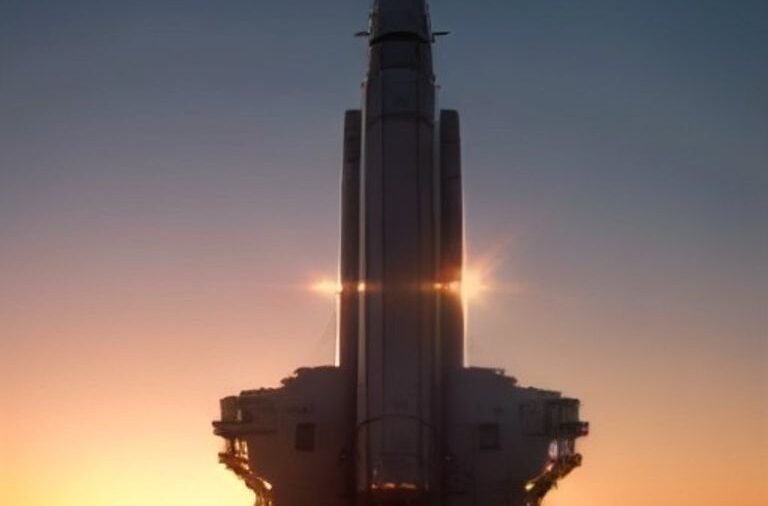
Introduction: The Old Paradigm of Space Economics
For the better part of seven decades, humanity treated space launch vehicles like multi-billion-dollar single-use fireworks. Whether looking at the Saturn V, the Ariane series, or the early iterations of the Space Shuttle—which promised rapid reusability but ultimately required extensive, expensive overhauls between flights—the aerospace industry operated on an expendable model. Building a rocket meant manufacturing intricate, bespoke airframes, flying them precisely once, and dropping millions of dollars of hardware into the ocean. This dynamic locked cost-per-kilogram metrics to low Earth orbit (LEO) in the tens of thousands of dollars, making large-scale commercial exploitation of space economically unviable for anything other than high-value government satellites and telecommunications hardware.
SpaceX’s Falcon 9 disrupted this baseline by introducing partial reusability, landing first-stage boosters and refurbishing them for subsequent flights. However, the upper stage and payload fairings remained disposable. To truly fracture the historical cost barrier, an entirely new architecture was required. SpaceX’s Starship system represents that paradigm shift: a fully reusable, heavy-lift transport system designed to fundamentally divorce the cost of spaceflight from the traditional economics of aerospace manufacturing.
The Holy Grail: Full and Rapid Reusability
The foundational economic driver of the Starship system is full and rapid reusability across both its Super Heavy booster and the Starship upper stage. In a traditional expendable architecture, the cost of manufacturing the vehicle dominates the price tag of the flight. By recovering, inspecting, and rapidly relaunching the entire stack, the economic equation shifts from aerospace manufacturing economics to commercial aviation economics, where the primary variable cost per flight becomes propellant, routine maintenance, and amortization of the hardware over hundreds of missions.
Achieving full reusability requires solving complex engineering challenges across high-velocity atmospheric re-entry, guidance, navigation, and landing. The operational loop for a fully reusable rocket system functions as a continuous cycle:
- Liftoff and Separation → Super Heavy booster separates from the Starship upper stage at staging velocity.
- Boostback and Return → Super Heavy executes a boostback burn, returning to the launch site.
- Tower Capture → The launch tower’s mechanical arms (“Mechazilla”) catch the descending Super Heavy booster mid-air.
- Orbital Insertion and Mission Execution → Starship completes its primary orbital payload delivery or transit objective.
- Atmospheric Entry and Thermal Protection → Starship re-enters the atmosphere protected by reusable heat shield tiles, executing a flip and propulsive landing.
- Turnaround and Refurbishment → The vehicles undergo rapid inspection, propellant reloading, and stacking for the next flight.
This rapid-turnaround methodology is designed to amortize the capital expenditure of building the rocket across a high flight cadence. If an airframe can fly dozens or hundreds of times, the marginal cost per flight plummets by orders of magnitude compared to expendable alternatives.
Massive Scale and Payload Capacity
Starship introduces an unprecedented payload capacity to low Earth orbit, targeted between 150 and 250 metric tons fully reusable. To understand the economic disruption of this scale, one must examine how payload mass scales against per-launch operational overhead. Launch operations, range fees, telemetry tracking, and ground crew requirements cost roughly similar amounts whether a rocket carries a 3-ton satellite or a 200-ton cargo bay. By increasing the mass fraction delivered per flight, the cost-per-kilogram metric drops precipitously.
| Launch System | Status | Reusability | Payload to LEO (Metric Tons) | Estimated Cost Per Launch | Cost Per Kilogram to LEO |
|---|---|---|---|---|---|
| Saturn V | Retired | Expendable | ~140 | ~$1.2B (Inflation adjusted) | ~$8,500 |
| Space Shuttle | Retired | Partially Reusable | ~27.5 | ~$1.5B (Inflation adjusted) | ~$54,500 |
| Falcon 9 | Active | Partially Reusable (Stage 1) | ~22.8 (Expendable LEO mode lower for reuse) | ~$67M | ~$2,900 |
| Starship | In Development | Fully Reusable | 150 – 250 | Undisclosed (Targeting < $10M marginal) | < $67 (At scale) |
This massive volume and mass capacity do more than lower existing costs; they enable entirely new mission profiles. Hardware that previously required extreme, expensive weight-optimization—such as massive optical space telescopes, thick radiation shielding for crewed habitats, or heavy nuclear propulsion prototypes—can now be built using standard, cost-effective industrial materials.
In-Space Propellant Transfer and Orbital Refueling
Operating a heavy-lift vehicle to deep space destinations like the Moon or Mars introduces a fundamental rocket science constraint known as the Tsiolkovsky rocket equation. Pushing a massive rocket out of Earth’s gravity well while carrying enough fuel to decelerate on another planetary body requires exponentially larger single-launch architectures, quickly hitting a point of diminishing returns.
Starship solves this through in-space propellant transfer and orbital refueling. A tanker variant of Starship launches to LEO, docks with a depot or a mission-ready Starship, and transfers cryogenic liquid oxygen and liquid methane. By refueling in orbit, Starship can depart Earth orbit with full propellant tanks, enabling high-energy transits to Mars or lunar surfaces without requiring an impossibly large single-stage launch vehicle on the pad. Economically, this transforms deep-space missions from single, monolithic, high-risk government expenditures into routine logistics operations managed by tanker fleets.
Stainless Steel and Iterative Prototyping (Agile Hardware)
SpaceX’s path to Starship departed sharply from traditional aerospace manufacturing norms. Early engineering concepts utilized expensive carbon composite materials. However, SpaceX abandoned carbon fiber in favor of 301 stainless steel.
The economic rationale for stainless steel is multi-layered:
– Cost: Industrial-grade stainless steel costs a fraction of aerospace-grade carbon composites per kilogram.
– Cryogenic Performance: Stainless steel actually increases in tensile strength at cryogenic temperatures, making it exceptionally resilient for liquid methane and oxygen storage.
– Thermal Tolerance: Stainless steel maintains structural integrity at higher temperatures than aluminum-lithium or carbon composites, reducing the mass required for active cooling or thermal protection systems on certain areas of the airframe.
Complementing this material choice is an agile, hardware-rich iterative prototyping philosophy. Rather than spending a decade on paper designs and wind-tunnel simulations before cutting metal, SpaceX builds full-scale prototypes rapidly, tests them to destruction on open-air pads, analyzes telemetry, and redesigns the next iteration within weeks. This failure-tolerant development strategy compresses timelines and bypasses the bloated cost structures typical of traditional cost-plus defense and aerospace contracting.
Market Ripple Effects: From LEO Constellations to Deep Space Commerce
The reduction in cost-per-kilogram to orbit triggers downstream market transformations across multiple sectors.
For low Earth orbit constellations like Starlink, the deployment economics shift dramatically. Instead of launching dozens of satellites on smaller rockets, a single Starship launch can deploy entire sub-constellations of next-generation, high-capacity satellites. This drastically lowers capital expenditure per gigabyte of orbital bandwidth deployed.
Beyond communications, commercial space stations currently struggling to find cost-effective logistics transport will rely on heavy-lift volume to deliver large, single-piece structural modules rather than cramped components assembled via robotic arms. Furthermore, early-stage lunar exploration and prospective asteroid mining concepts transition from speculative science fiction to economically trackable R&D, as the baseline cost of moving heavy infrastructure beyond LEO falls within commercial venture capital horizons.
Challenges on the Horizon: Regulatory, Technical, and Financial Hurdles Despite the profound economic potential, Starship faces significant technical, regulatory, and financial bottlenecks before achieving routine commercial operations.
From a technical standpoint, heat shield durability remains a primary hurdle. Ensuring that thousands of reusable ceramic thermal protection tiles can survive violent atmospheric re-entry without cracking, detaching, or requiring extensive manual replacement between flights is an ongoing engineering challenge. Additionally, perfecting the precision guidance required to catch heavy boosters and ships using the launch tower arms demands flawless execution under adverse weather conditions.
Regulatorily, launch cadences at sites like Starbase in Texas and Cape Canaveral in Florida are subject to strict environmental reviews, wildlife protections, and airspace closures. Scaling launch frequency to airline-like cadences requires navigating complex regulatory frameworks designed for expendable, infrequent rocket launches. Financially, the capital expenditure required to scale Starship production, build out orbital refueling infrastructure, and sustain iterative flight test campaigns represents an enormous financial risk, even for a well-capitalized entity like SpaceX.
Conclusion: A New Era of Interplanetary Commerce
SpaceX’s Starship is rewriting rocket economics by replacing the high-cost, single-use paradigm of traditional aerospace with full and rapid reusability, massive payload scaling, and agile manufacturing. By driving down the cost of delivering mass to orbit, Starship bridges the gap between space as an exclusive government domain and space as an open commercial frontier. As technical hurdles are cleared and flight cadences mature, this architecture lays the economic foundation for a multi-planet civilization and an unprecedented era of interplanetary commerce.
Frequently Asked Questions
What is the projected cost per kilogram to orbit with SpaceX’s Starship?
SpaceX has publicly stated long-term goals to reduce the marginal cost of Starship launches to under $10 million per flight. When operating at peak flight cadences with a payload capacity of 150 to 250 metric tons, this translates to a cost-per-kilogram to low Earth orbit dropping well under $100—a dramatic reduction compared to historical standards.
How does Starship’s full reusability differ from Falcon 9’s partial reusability?
Falcon 9 recovers its first-stage booster and payload fairings, but the second stage and upper-airframe components are expended on every flight. Starship, by contrast, is designed for full reusability of both the Super Heavy booster and the Starship upper stage, allowing the entire vehicle system to be flown repeatedly with minimal refurbishment.
Why did SpaceX choose stainless steel instead of carbon fiber for Starship?
While SpaceX initially experimented with carbon composites, they switched to 301 stainless steel due to its exceptional strength at cryogenic temperatures, high melting point, superior tolerance to atmospheric re-entry heating, and massive cost advantages over composite materials.
How does orbital refueling impact Starship’s deep space economics?
Orbital refueling allows Starship to launch into low Earth orbit with empty or partial propellant tanks, dock with a tanker variant, and top off its propellant reserves before journeying to the Moon or Mars. This eliminates the need to build exponentially larger, single-launch rockets capable of escaping Earth’s gravity well with a full fuel load.
When is Starship expected to achieve routine commercial flight operations?
Exact timelines for routine commercial operations depend on the successful resolution of ongoing flight testing, heat shield validation, regulatory approvals, and the deployment of operational orbital refueling capabilities. SpaceX continues an aggressive iterative flight testing cadence to validate these systems.
Related reading
- NASA’s New Rocket Built for the First Crewed Mars Mission
- Why Your Phone’s Camera Uses AI More Than Glass Now
- How Space Debris Could Strand Us on Earth
- Why Fusion Energy Keeps Almost Happening: The Science & Delays
- Inside the First Fully 3D-Printed Neighborhood: Wolf Ranch
- How Self-Driving Cars Actually See the Road
- Robots Are Now Running Marathons — How Do They Stay Upright?
- Exploring the Hottest Planet in Our Solar System

[…] How SpaceX’s Starship is Rewriting Rocket Economics […]