Introduction: Welcome to the Farm of Tomorrow
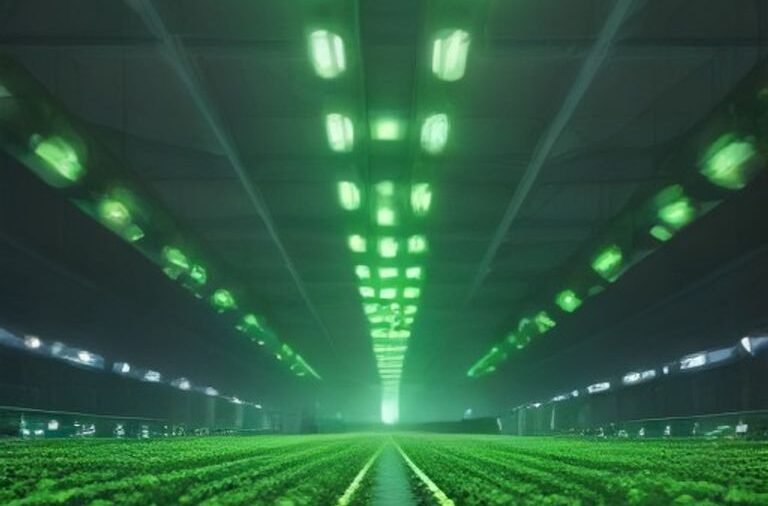
Rows of vibrant green lettuce stretch toward multi-tiered LED light arrays inside a vast, windowless warehouse, while mechanical arms glide silently along overhead tracks to prune, monitor, and harvest without a single human hand touching the soil. This is the reality inside the world’s first fully robot-run farms, where artificial intelligence and advanced robotics have replaced the traditional tractor, the hoe, and the seasonal farmhand. As global food systems face unprecedented pressures from a changing climate and shrinking labor pools, these automated facilities offer a glimpse into how humanity will feed itself in the coming decades. This article explores the mechanics of autonomous agriculture, the technology powering it, and the profound changes it brings to the global food supply.
What is a Robot-Run Farm?
Fully automated agriculture represents a complete paradigm shift from traditional mechanized farming. While a conventional farm relies on heavy machinery like tractors and combines, those machines are merely tools operated by human drivers who make decisions based on intuition, visual checks, and historical habits. A robot-run farm, by contrast, operates through autonomous decision-making systems.
In a true robot-run environment, artificial intelligence algorithms continuously process data from thousands of sensors, determining when a crop needs water, nutrients, or light adjustments. The machinery—ranging from ground-level rovers to gantry-mounted robotic arms—executes these tasks independently. The following comparison highlights how traditional mechanization differs from fully autonomous farming across key operational areas.
| Feature | Traditional Mechanized Farming | Fully Robot-Run Agriculture |
|---|---|---|
| Operation | Human-driven or manually programmed machinery | Autonomous AI-driven decision-making and execution |
| Monitoring | Visual inspection by farmers across large areas | Continuous, plant-by-plant sensor and camera tracking |
| Resource Application | Broad-spectrum broadcasting (entire fields) | Targeted micro-dosing (individual plants or roots) |
| Labor Requirement | High seasonal dependence on manual labor | Low labor requirement, primarily technical oversight |
| Environment | Open fields subject to weather volatility | Controlled indoor environments or precision outdoor fields |
A Day in the Life of an Autonomous Farm
Operating without human workers requires a continuous, tightly orchestrated sequence of events that repeats twenty-four hours a day, three hundred and sixty-five days a year.
To understand how data and physical actions flow through an autonomous agricultural facility, consider the following operational loop:
- Environmental Assessment → IoT sensors and high-resolution cameras capture real-time metrics on temperature, humidity, CO2 levels, and substrate moisture.
- AI Data Processing → The central neural network analyzes the incoming data streams against optimal growth parameters for each specific crop variety and growth stage.
- Autonomous Task Allocation → The system generates individualized work orders, dispatching robotic gantry arms to adjust nutrient flow or deployment rovers to inspect specific anomalies.
- Precision Execution → Mechanical actuators deliver exact micro-doses of water and organic nutrients directly to individual root zones or adjust spectral outputs on LED arrays.
- Growth Verification → Optical scanners photograph the crop canopy to measure biomass accumulation and check for early signs of physiological stress or disease, feeding the results back to Step 1.
The Technology Driving the Revolution
The seamless operation of a robot-run farm relies on the convergence of several maturing technologies. Artificial intelligence serves as the brain, processing complex multidimensional datasets to predict crop behavior and yield timelines. Computer vision acts as the eyes, utilizing multispectral and infrared cameras to detect microscopic shifts in leaf coloration or early pest infestations long before they are visible to the human eye.
Beneath the surface, Internet of Things (IoT) sensor networks form a digital nervous system, measuring electrical conductivity, pH balance, and transpiration rates directly within the growing media. Finally, autonomous mobility platforms—ranging from omnidirectional floor rovers to overhead cable-suspended gantry systems—provide the physical dexterity needed to navigate dense crop rows without damaging delicate foliage.
Why We Need Automated Agriculture
The rapid acceleration toward robot-run farming is not driven by technological novelty, but by severe systemic pressures facing traditional agriculture. The global population continues to expand toward projected peaks, requiring substantially higher food production on a finite amount of arable land. Simultaneously, climate change introduces extreme weather volatility, making open-field farming increasingly unpredictable and prone to catastrophic crop failures.
Compounding these environmental challenges is a deepening global labor shortage. Rural depopulation and aging farming demographics have made it difficult to secure seasonal workers for planting, weeding, and harvesting. According to industry reports from groups like AgFunder, these labor deficits have driven massive surges in venture capital and research investments toward autonomous agricultural solutions over the past five years, as producers seek reliable ways to maintain yields without relying on scarce manual labor.
Environmental Impact: Can Robots Save Resources?
Agriculture is notoriously resource-intensive, placing immense strain on global ecosystems. According to data from the Food and Agriculture Organization (FAO), agriculture accounts for roughly seventy percent of global freshwater withdrawals, making water-use efficiency an urgent environmental priority.
Robot-run farms, particularly indoor vertical setups, address this challenge through closed-loop hydroponic and aeroponic systems. Controlled environment agriculture studies compiled by organizations like the Association for Vertical Farming indicate that these automated facilities can use up to ninety-five percent less water than traditional open-field agriculture by capturing, filtering, and recirculating every drop of unused moisture.
Beyond water conservation, precision automation eliminates the need for broad-spectrum chemical sprays. Instead of blanketing an entire field with pesticides or fertilizers, an AI-guided robot can target a single weed with a focused laser or apply microscopic nutrient droplets directly to an individual plant’s root zone. This dramatically reduces chemical runoff into local watersheds and lowers the overall carbon footprint of food production.
Challenges and Growing Pains
Despite their impressive efficiency, robot-run farms face significant hurdles that limit their immediate, universal adoption. The most formidable barrier is capital expenditure. Designing, building, and equipping a fully automated facility requires massive upfront financial investment for specialized robotics, climate control infrastructure, and proprietary AI software licenses.
There are also technical limitations. While computer vision and machine learning have advanced rapidly, delicate, irregularly shaped produce grown outdoors can still confuse mechanical harvesters. Furthermore, these systems depend on uninterrupted power grids, high-speed connectivity, and specialized maintenance personnel who understand both mechanical engineering and agronomy. When a robotic actuator fails in a remote facility, it requires expert troubleshooting that local general contractors cannot provide.
What This Means for the Future of Food
As technology matures and component costs decline, the influence of robot-run farms will extend far beyond high-tech agricultural startups. Localized, automated growing modules could soon operate inside urban centers, reducing food miles and ensuring year-round access to fresh produce regardless of regional weather conditions.
For traditional farmers, the future will likely involve a hybrid approach, where autonomous rovers and AI-assisted implements are retrofitted onto existing machinery to optimize outdoor fields. Ultimately, automation will shift the role of the farmer from manual laborer to high-level agricultural manager, transforming how food moves from seed to table.
FAQs
How does a robot-run farm actually work without human workers?
A robot-run farm operates through a closed loop of sensors, artificial intelligence, and physical robotics. IoT sensors monitor environmental conditions and plant health continuously, sending data to a central AI system. The AI evaluates the data against optimal growth profiles and automatically dispatches robotic gantry systems, mechanical arms, or ground rovers to handle tasks like watering, fertilizing, and harvesting without human intervention.
Are crops grown on automated farms safer or healthier?
Crops grown in automated indoor environments are often safer because they are shielded from outdoor pollutants, animal pests, and unpredictable weather events. Additionally, because these facilities use precise micro-dosing for nutrients and targeted controls rather than broad-spectrum chemical sprays, the final produce typically carries little to no pesticide residue.
When will we see fully automated farms supplying our local grocery stores?
Many urban centers already receive leafy greens and herbs from automated vertical farms operating on the outskirts of cities. However, scaling this technology to supply staple grain crops, root vegetables, and complex field-grown produce to every local grocery store will take decades due to high upfront building costs and the current technical limits of outdoor field robotics.
How do automated farms save water and resources compared to traditional farming?
Automated farms utilize closed-loop irrigation and hydroponic systems that capture and recycle water continuously, preventing the massive evaporation losses common in open-field flood or sprinkler irrigation. Combined with AI-guided micro-dosing that applies water and nutrients only where needed, these systems can drastically reduce resource consumption.
What are the high costs and technical hurdles preventing immediate global adoption?
The primary barriers are extreme upfront capital expenditure requirements for specialized hardware and software, the complexity of maintaining sensitive robotics, and the technical challenge of building machines that can harvest delicate, irregular crops outdoors without damaging them.
Related reading
- Inside the Robot Warehouse That Never Sleeps: The Future of Fulfillment
- Inside the Robot Dogs Guarding Power Plants
- The Intricate Balance: Artificial Intelligence and Human Contributions
- Inside the World’s Fastest Supercomputer: Exascale & Beyond
- Inside the Robot Chefs Cooking in Real Restaurants
- Why Brain-Computer Interfaces Are Closer Than You Think
- Inside the First Fully 3D-Printed Neighborhood: Wolf Ranch
- Why AI Models Are Shrinking Instead of Growing
