Inside the Robot Warehouse That Never Sleeps: The Future of Fulfillment
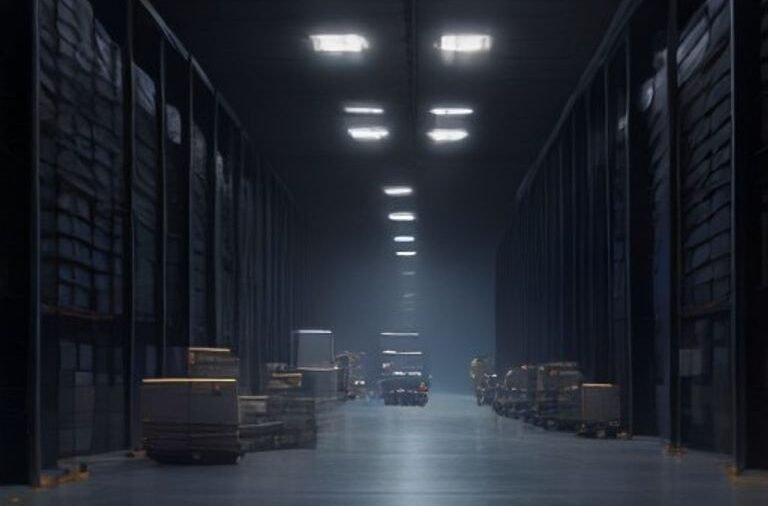
Step inside a modern automated fulfillment center during the graveyard shift, and you will find an environment that defies every traditional expectation of a workplace. There is no clatter of pallet jacks, no chatter among pacing pickers, and, in many zones, not a single overhead light turned on. Rows of towering metal storage racks stretch into absolute darkness, populated entirely by fleets of squat, glowing autonomous robots gliding silently across the floor. These facilities, often referred to as “lights-out” warehouses, operate 24 hours a day, 365 days a year. They represent the quiet pinnacle of modern supply chain engineering, where human fatigue has been completely factored out of the equation.
The Evolution of Fulfillment: From Bins to Bots
For decades, the global supply chain relied on manual labor. Workers known as pickers walked miles each shift down endless aisles of inventory, pushing carts or pulling pallet jacks to locate items listed on paper manifests or handheld barcode scanners. This traditional model was constrained by human physical limitations. Workers experienced fatigue, struggled with inventory misplacements, and required breaks, shift changes, and well-lit environments to maintain safety.
As e-commerce exploded over the past twenty years, order volumes scaled faster than the available labor pool could support. Companies faced rising fulfillment costs, slower delivery expectations from consumers, and chronic labor shortages. The response was a radical pivot toward mechanization. Early automation introduced conveyor belts and vertical carousel modules, but these systems were rigid and struggled with SKU proliferation—the vast variety of shapes, sizes, and weights that modern consumers order.
The breakthrough came with the convergence of advanced robotics, reliable battery technology, and sophisticated enterprise software. Instead of forcing human workers to walk to the inventory, engineers designed systems where the inventory comes to the worker—or, in fully advanced setups, where robots handle both the transport and the item retrieval entirely. This evolution transformed warehouses from massive, brightly lit human-centric lockers into high-density, hyper-efficient machine ecosystems.
| Feature | Traditional Manual Warehouse | Lights-Out Robotic Warehouse |
|---|---|---|
| Lighting | Fully lit throughout all storage and packing zones | Dark or low-light storage zones; robots do not require light |
| Operating Hours | Typically shift-based (8 to 16 hours/day), with planned downtime | 24/7/365 continuous operation |
| Worker Movement | High (workers walk miles per shift retrieving stock) | Low/Optimized (robots travel; human roles are stationary) |
| Error Rate | Higher risk of human picking and placement errors | Exceptionally low due to computer vision and barcode scanning |
| Scalability | Constrained by local labor supply and physical training times | Easily scalable by adding more mobile robots to the fleet |
Anatomy of a Lights-Out Warehouse
A lights-out fulfillment center is not merely a room full of robots; it is an integrated system of structural engineering, hardware, and software. At the foundation is the physical infrastructure: reinforced, laser-leveled concrete floors that allow robotic drive units to glide without friction or vibration. Above these floors rise dense matrices of storage pods, often called “goods-to-person” grids, where products are packed tightly into plastic bins stacked meters high.
Suspended or integrated sensor grids blanket the facility. Rather than relying on simple motion detectors, these networks use optical markers on the ceiling, radio-frequency identification (RFID) tags embedded in the floor, and local Wi-Fi or private 5G networks to maintain real-time telemetry on every asset in the building. Robotic arms equipped with computer vision and pneumatic suction grippers manage the high-speed transfer of items from storage bins into shipping cartons. Meanwhile, automated guided vehicles (AGVs) handle heavy-duty horizontal transport, hauling pallets of bulk inventory from receiving docks to storage zones without human steering.
How Autonomous Mobile Robots (AMRs) Navigate
Unlike older automated guided vehicles that required magnetic strips or physical wire guides buried in the warehouse floor, modern Autonomous Mobile Robots (AMRs) navigate dynamically. Each robot is equipped with Light Detection and Ranging (LiDAR) sensors, depth-sensing cameras, and onboard inertial measurement units (IMUs). As an AMR moves, its LiDAR sweeps the surrounding environment millions of times per second, building a real-time point cloud map of obstacles, other robots, and human workers.
Behind this local navigation sits a centralized fleet management software system. Think of this software as an air traffic control tower for the facility. When an order requires an item from a specific bin, the fleet manager calculates the optimal path for dozens of AMRs simultaneously, preventing gridlock and avoiding collisions. If an obstruction appears unexpectedly—such as a maintenance cart left in an aisle—the central software instantly recalculates alternative routes for affected robots in fractions of a second, broadcasting updated navigation paths over the local wireless network.
A Day in the Life of a 24/7 Automated Facility
To understand how these components function together, consider the lifecycle of a single e-commerce order inside a modern automated facility.
- Order Initiation: A customer clicks “buy” on an online storefront, and the order data instantly populates the warehouse’s Warehouse Execution System (WES).
- Inventory Identification: The WES determines which storage pod holds the requested item and checks which AMR is closest to that specific pod with sufficient battery charge.
- Robotic Retrieval: The assigned AMR glides underneath the storage pod, lifts it using an integrated motorized screw or hydraulic lift platform, and transports it across the floor.
- Dynamic Routing: The robot navigates past other moving units using LiDAR and central fleet coordination, arriving at an ergonomic picking station.
- Item Picking: At the station, a stationary human worker (or an automated robotic arm) is guided by a laser pointer or projection screen to reach into the exact bin, grab the item, and scan it.
- Consolidation and Boxing: The scanned item is placed onto a automated conveyor belt that routes it to a high-speed auto-boxer, which measures the item dimensions and cuts a custom-fitted cardboard box to reduce void fill.
- Labeling and Sorting: The package passes through an automated print-and-apply labeling machine that affixes the correct shipping label, after which a tilt-tray sorter kicks the package down the designated chute for carrier loading.
The Human Element: Who Still Works Here?
A common misconception is that lights-out warehouses are completely devoid of human life. While the picking and storage aisles may be dark and empty of people, hundreds of personnel still work on-site in dedicated, brightly lit support zones. Automation eliminates repetitive, physically taxing walking and lifting tasks, but it creates a vital need for specialized human oversight.
Systems engineers monitor the software dashboards, watching for bottlenecks, algorithmic inefficiencies, or software anomalies. Maintenance technicians are on call around the clock to service hardware—clearing jammed conveyor belts, replacing worn-out robot wheels, and performing preventative diagnostics on robotic arms. Safety supervisors ensure that safety interlocks and emergency stop perimeters function correctly whenever human technicians need to enter active robotic zones for maintenance.
The Benefits and Challenges of Non-Stop Automation
The advantages of continuous, automated fulfillment are profound. From a business perspective, lights-out operations maximize the return on capital investment by keeping expensive real estate and machinery productive twenty-four hours a day. Energy consumption in storage zones drops significantly because overhead lighting, climate control for human comfort, and wide walking aisles are no longer necessary. Accuracy rates approach near-perfection, drastically reducing costly returns caused by mispicked items.
However, these systems are not without significant challenges. The initial capital expenditure required to install high-density storage grids, sensor arrays, and robot fleets can run into tens or hundreds of millions of dollars, putting them out of reach for smaller enterprises.
Furthermore, lights-out facilities introduce unique operational vulnerabilities. A major power outage, network disruption, or cascading software glitch can bring the entire operation to a grinding halt, turning a high-speed fulfillment engine into a motionless fortress. Warehouses must invest heavily in redundant backup power systems, uninterruptible power supplies (UPS), and rigorous fail-safe protocols to mitigate these risks. Finally, handling fragile, irregular, or uniquely shaped items—such as long gardening tools or delicate glassware—still presents hurdles that demand human intervention or advanced dexterity programming.
What’s Next? The Future of Supply Chain Tech
The technology powering automated warehouses continues to evolve rapidly. The integration of generative AI and large multimodal models is beginning to allow robotic arms to handle unstructured environments with greater dexterity, recognizing unfamiliar items and determining the safest way to grasp them without prior training.
Research and development are also pushing toward fully autonomous last-mile handoffs. Future facilities are exploring integrated drone delivery docks and autonomous trucking staging bays, where robotic systems load long-haul trailers and local delivery drones directly without human dock workers. As these technologies mature, the warehouse of the future will shift from being merely automated to being cognitively adaptive, capable of self-optimizing its layout, inventory placement, and routing algorithms in real time based on shifting consumer demand patterns.
Frequently Asked Questions
Do humans work inside robot warehouses?
Yes. While robots handle the bulk of storage retrieval, transport, and sorting in dark zones, humans work in support roles across the facility. Personnel include systems engineers, maintenance technicians, safety supervisors, and operators stationed at ergonomic picking and packing stations.
How do warehouse robots avoid crashing into each other?
AMRs use a combination of onboard LiDAR, depth-sensing cameras, and collision-avoidance sensors to detect immediate obstacles. Simultaneously, a centralized fleet management software system coordinates the paths of every robot in the facility, acting like an air traffic controller to direct traffic and prevent gridlock.
What happens if a warehouse robot breaks down during a shift?
If an AMR experiences a mechanical failure or a low battery malfunction while on the floor, its onboard diagnostics alert the central management system. The system immediately reroutes other robots around the disabled unit. Human maintenance technicians are then dispatched to retrieve the unit and swap it out with a charged, functional replacement from the maintenance depot.
Related reading
- The Chip Inside Every AI Data Center You’ve Never Heard Of
- 10 Tech Inventions Arriving in the Next Two Years
- Top 10 Recent Tech Developments You Need to Know
- Why Passkeys Are Finally Replacing Passwords
- Inside the Lab Growing Human Organs for Transplant
- Why Your Phone’s Camera Uses AI More Than Glass Now
- Robots Are Now Running Marathons — How Do They Stay Upright?
- Inside the AI that runs on 50MB of memory

[…] Inside the Robot Warehouse That Never Sleeps: The Future of Fulfillment […]
[…] Inside the Robot Warehouse That Never Sleeps: The Future of Fulfillment […]
[…] Inside the Robot Warehouse That Never Sleeps: The Future of Fulfillment […]
[…] Inside the Robot Warehouse That Never Sleeps: The Future of Fulfillment […]